Blog: Recipes & Tips / FODMAP tips
FODMAP tips
Low FODMAP Thanksgiving:an IBS-friendly guide to the feast
A low FODMAP Thanksgiving, dish by dish: turkey, stuffing, gravy, sweet potatoes, cranberry sauce and pies, and how to plan an IBS-friendly meal.
By the Belly Buddy team · Updated November 2026
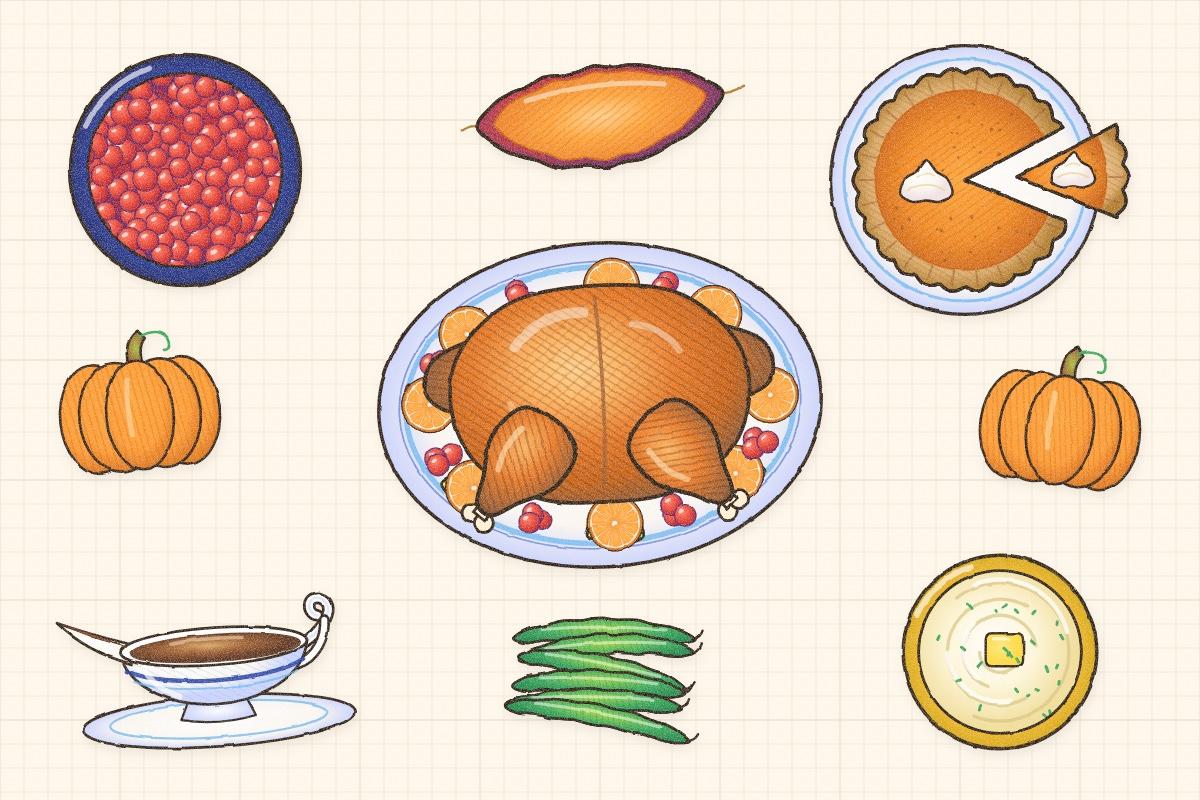
Thanksgiving is a meal of many side dishes. Every family has its own recipes, and many of them come from someone else's kitchen. On the low FODMAP diet, that can make the table hard to read.
The centre of the meal is easier than it looks. Plain roast turkey contains no FODMAPs. Most of the FODMAPs at Thanksgiving come from a few ingredients in the sides, the sauces and the pies.
This guide looks at the classic dishes one by one, and explains why some of them need a closer look. It is not a list of things to give up. The aim is to enjoy the meal.
Where FODMAPs tend to appear at Thanksgiving
The same ingredients appear on most Thanksgiving menus:
- Onion and garlic, in stuffing, gravy, casseroles and seasoning mixes
- Wheat, in bread rolls, stuffing, pie crusts and some gravies
- Milk, cream and evaporated milk, in mashed potatoes, casseroles and pumpkin pie
- Mushrooms, in green bean casserole
- Honey and high fructose corn syrup, in glazes and some ready-made sauces
Each one depends on the amount. A splash of milk in the mash is a different dose from a bowl of creamy casserole. Our article on FODMAP serving sizes explains why the portion matters as much as the food.
The Thanksgiving table, dish by dish
Roast turkey
Plain roast meat contains no FODMAPs, according to Monash University. The seasoning is what can change this. A rub made with onion or garlic powder, or a glaze made with honey, adds FODMAPs to the outside of the bird.
Stuffing
Monash University notes that most traditional stuffing recipes use high FODMAP bread, onion and garlic. Its low FODMAP version uses a low FODMAP bread, garlic-infused olive oil and only the green tops of spring onions.
The infused oil works because fructans, the FODMAP in garlic and onion, dissolve in water but not in oil. The garlic flavours the oil, and the fructans stay in the solid pieces that you remove. Our garlic and onion guide explains this in more detail.
Many boxed stuffing mixes list dried onion or garlic. The ingredient list tells you what is inside.
Gravy
Monash suggests some care with gravy and stuffing when you are not sure of the ingredients. The pan juices of a plain roast contain no FODMAPs. Gravy usually gets its FODMAPs from what is added: a stock that lists onion or garlic, and wheat flour as a thickener.
Fructans dissolve in water. So a stock simmered with onion keeps its fructans even when the onion is removed. That is the opposite of the infused oil. A gravy made from the pan juices, a stock with no onion or garlic, and cornflour as the thickener avoids the usual sources.
Mashed potatoes
Monash lists potato as a low FODMAP vegetable. In mash, the FODMAPs come from the dairy. Cow's milk contains lactose, and plain lactose-free milk is a low FODMAP option. Our article on lactose-free milk explains why "lactose-free" and "low FODMAP" are not the same label.
Sweet potatoes
Sweet potato has a low FODMAP serving, and larger servings contain more FODMAPs. Monash gives the example of a soup made only of sweet potato: a large bowl is unlikely to be well tolerated. The same soup made with potato, carrot and parsnip as well can be low FODMAP.
The same idea works for a sweet potato bake. Mixing sweet potato with potato or carrot keeps the amount of sweet potato on your plate smaller. For a glaze, maple syrup is on Monash's list of low FODMAP sweeteners, and honey is on the high list.
Green bean casserole
Green beans are on Monash's list of low FODMAP vegetables. Mushrooms are on the high list, because they contain polyols. The classic recipe also uses a creamy canned soup and fried onions on top. Canned cream soups can list onion, garlic, wheat flour and milk.
A simpler version puts the green beans first. Roast or fry them in garlic-infused oil and add toasted walnuts or pumpkin seeds for crunch. Both are on Monash's low FODMAP list.
Cranberry sauce
Cranberries contain fructans, so Monash notes that the amount matters. Its low FODMAP cranberry sauce combines dried cranberries with blueberries and sugar. A spoonful next to your turkey is a small serving.
Ready-made cranberry sauces differ from brand to brand. Some list high fructose corn syrup, which Monash lists as high in FODMAPs. Table sugar is on the low list.
Bread rolls and cornbread
Monash lists breads made from wheat, rye or barley as high in FODMAPs. Cornbread depends on the recipe. Many recipes mix cornmeal with wheat flour, and some add milk or buttermilk.
A gluten-free roll is a good starting point, but gluten-free does not always mean low FODMAP. Some gluten-free products add other FODMAPs, so the ingredient list still matters. Our article on FODMAPs and gluten explains the difference.
Pumpkin pie and pecan pie
Monash publishes low FODMAP versions of both pies. Its pumpkin pie uses canned or fresh pumpkin purée, a gluten-free pastry and lactose-free cream. Many classic recipes use evaporated milk, which Monash lists as high in FODMAPs.
Its pecan pie uses pecans, maple syrup, rice malt syrup and gluten-free flour.
In both pies, most of the change is in the pastry and the dairy. The filling you remember stays close to the original.
Hosting, or bringing a dish
These ideas come from Monash University's festive season advice:
- Bring a dish to share. A salad or a tray of vegetables that you know you enjoy means there is always something on the table for you. Monash suggests ideas such as roast parsnips, a roast pumpkin salad or a potato salad with green beans.
- Start your plate with the simple parts. Plain turkey and potatoes are a good base.
- Ask about the gravy and the stuffing. These are the two dishes Monash flags when you are not sure of the ingredients.
- Make space for rest. Stress can affect IBS symptoms, and a holiday with family can be busy. A walk after the meal counts.
If you are a guest, a short message to your host is usually enough: "I'm avoiding onion and garlic at the moment, can I bring a side?"
A long meal, snacks and leftovers
Thanksgiving often starts with snacks in the afternoon. Monash suggests small servings, such as one piece of fruit or a handful of nuts, and less greasy food, which can make symptoms worse in some people.
A plate with many dishes adds several servings together. This is often called FODMAP stacking. Monash notes that most people on the diet tolerate a meal that combines several low FODMAP servings. A very large portion of one food is a bigger change. So you do not need to weigh every spoonful. Noticing the size of your servings is usually enough, and leftovers let you enjoy the same dishes over two days.
For drinks, our article on alcohol and FODMAPs and our low FODMAP Christmas guide apply to Thanksgiving too.
If you eat something unexpected
A spoon of onion in the gravy happens. Monash's advice is simple: if a few hidden FODMAPs land on your plate, don't panic. You can continue with your plan at the next meal.
If you are in the middle of reintroduction, a meal with many unknown ingredients can make your results harder to read. Your dietitian can help you plan your challenges around the holiday.
And if you already know your tolerances, use them. The goal of the low FODMAP diet is the most varied diet you personally tolerate, and that includes Thanksgiving.
Let Belly Buddy check the Thanksgiving shopping
Stuffing mixes, stock, canned soups, cranberry sauce, pie crusts: the Thanksgiving shop is full of ingredient lists. Scan a product with Belly Buddy to get a clearer view of its FODMAP profile. Belly Buddy flags declared sources of onion, garlic, wheat, milk, honey, high fructose corn syrup and other FODMAPs when they appear in the ingredient list. It works with what the manufacturer declares, so it cannot see what went into a homemade dish.
Our sauce and bread aisle guides name products rated low, with short notes on common foods.
Our rating method explains how Belly Buddy analyses ingredients and reaches a verdict.
Belly Buddy is not affiliated with or endorsed by Monash University. Our FODMAP information is informed by publicly available scientific sources, including research from Monash University.

Looking for a low FODMAP swap?
Scan a product with Belly Buddy. If it is not rated low FODMAP, the app suggests up to three low FODMAP alternatives sold in your country.